Industries › Padel Clubs

Payment Processing Built For Padel Clubs

Court bookings, membership dues, and pro shop sales — all under one provider with transparent pricing, instead of three vendors and three statements.

Get Your Rate Review
Built For Padel Clubs

Made For How Padel Clubs Actually Get Paid

Padel clubs run on more than one revenue stream: court-reservation fees booked through an app, recurring membership dues, league and tournament entry fees, and pro shop sales for paddles and balls at the front desk. Argent consolidates all of it — bookings, memberships, and pro shop sales — into one processing setup instead of three vendors managing three different systems.

Who We Work With

Argent processes payments for padel and racquet-sport businesses, including:

Indoor Padel Clubs Outdoor Padel Complexes Padel & Pickleball Hybrid Facilities Padel Leagues & Tournament Organizers Padel Pro Shops Racquet & Paddle Sports Clubs Multi-Court Racquet Centers Padel Coaching Academies Municipal & Private Court Operators Padel Franchise Locations
Why Padel Clubs Choose Argent

What Working With Argent Looks Like

Transparent Pricing

We explain every line item on your merchant statement before you sign anything.

Fast Deposits

Your funding timeline is set to match your business, not a one-size-fits-all schedule.

Real Support

You'll have one named person on your account team who knows your business — not a rotating call center.

Modern Equipment

Terminals, kiosks, and payment hardware that keep up with how you take payments.

Easy Switching

Argent handles the transition, with minimal downtime for day-to-day operations.

Built For Growth

One location or twenty, the setup scales with you.

Wondering how much you could save?Schedule a quick call and we'll walk through your pricing together.

Get My Rate Review
Common Challenges

Common Padel Clubs Payment Challenges

The same five issues come up again and again for padel clubs shopping for a processor.

Processing Fees You Don't Expect

Markups, tiered pricing, and card-brand fees stack up in ways that aren't obvious until the statement arrives.

Court Reservations That No-Show Without Consequence

Without a deposit or cancellation-fee policy tied to your booking platform's payments, no-shows cost you a filled court and the revenue that would have come with it.

Membership Dues That Don't Auto-Renew Cleanly

An expired or reissued card on file silently breaks recurring billing, turning an automatic renewal into a manual follow-up call.

Pro Shop And Court Fees On Separate Systems

When your booking platform and your pro shop point-of-sale aren't talking to each other, reconciling a day's revenue becomes manual work.

Coordinating Too Many Vendors

Software platform, payment processor, equipment provider — one problem can mean three different phone calls.

How It Works

How Padel Clubs Payment Processing Actually Works

Every transaction goes through the same basic chain before the money lands in your account. Here's what actually happens, and where the fees come from.
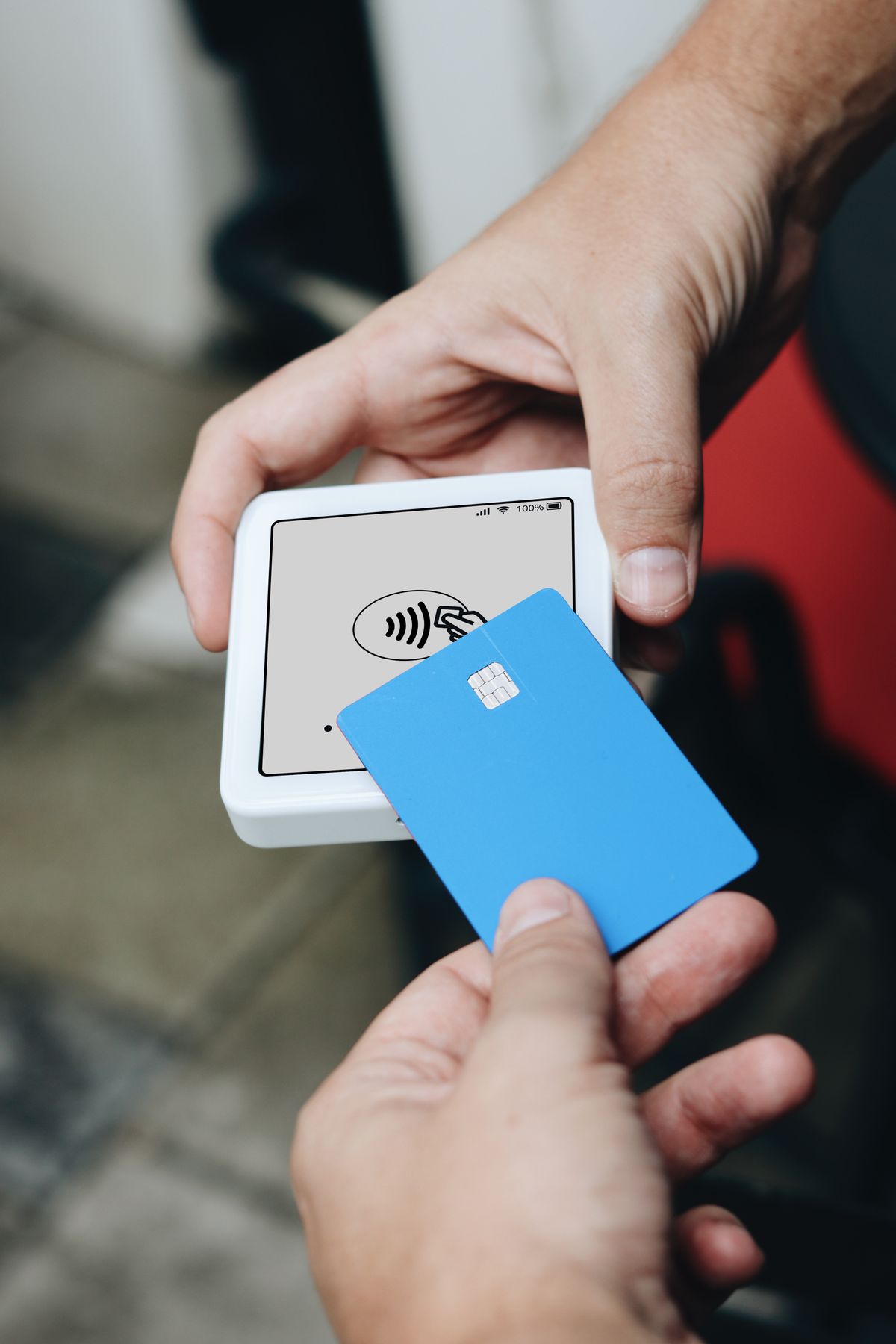
Contactless card payment at a front desk terminal
What Is Padel Clubs Payment Processing?

Padel Clubs payment processing is the financial and technical infrastructure that moves funds from a customer's debit or credit card to your business bank account, through authorization, batch settlement, and deposit.

Customer
Terminal / Kiosk
Argent
Card Networks & Bank
Deposit In Your Account
  1. 1

    Authorization

    When a customer pays, their card issuer approves or declines the transaction in real time — checking the card is valid, has funds available, and isn't flagged for fraud. This happens in one to two seconds, whether the charge comes from a front-desk kiosk, an app, or an unattended terminal.

  2. 2

    Interchange

    Interchange is the fee set by Visa, Mastercard, and the other card networks on every transaction — not by Argent or any processor. It varies by card type, with rewards and business cards typically costing more to accept than basic debit.

  3. 3

    Processor Markup

    On top of interchange, your processor adds its own markup. With Interchange-Plus pricing, that markup is one disclosed percentage and per-transaction fee, visible on every statement — instead of a flat fee that blends the network's real cost and the markup into one number you can't audit.

  4. 4

    Settlement

    After authorization, transactions are grouped into a batch and sent to the card networks for settlement, usually once a day. This is when a charge moves from "approved" to actually being processed for payment.

  5. 5

    Deposits

    Once settlement clears, funds move to your business bank account — typically the next business day, depending on your processor's funding schedule and your bank's cutoff times.

  6. 6

    Booking Software Integration

    Your court-reservation platform and your payment processor are two separate pieces of software. When they're integrated well, a court booking, a membership charge, and a pro shop sale all process through the same account instead of three disconnected systems you have to reconcile by hand.

  7. 7

    PCI Compliance

    PCI DSS is the security standard every business that accepts cards has to follow, covering how card data is transmitted, stored, and protected. Your processor handles most of the technical requirements, but every business still owns the basics.

That's the full chain behind every transaction — and most owners only ever see the last line on their statement. Argent's role isn't just to move that transaction; it's to make sure you understand what you're paying, why you're paying it, and whether a different pricing structure could save you money as you grow.

Padel Payment Trends

Padel Growth & Payment Trends Worth Knowing

Padel is one of the fastest-growing racquet sports in the US, and the payment habits of the members filling those new courts skew heavily contactless.

112,000+

Americans played padel in 2025, after the player base grew roughly 250% since 2022 — one of the fastest-growing racquet sports in the country.

Source: Padel Paper / Misitrano Consulting, 2025 State of Padel
+51.5%

year-over-year growth in US padel clubs as of Q2 2025, as court construction races to keep up with demand.

Source: Padel Paper
~40%

of in-person purchases now involve a contactless tap, up from about 1 in 8 in 2020.

Source: Federal Reserve, 2026 Diary of Consumer Payment Choice
Common Reasons To Switch

Why Padel Clubs Switch Payment Processors

If any of these sound familiar, it's worth getting a second opinion on your current setup.

I'm paying too much on court-reservation fees.

A statement review usually turns up markup that was never clearly disclosed. We'll show you the real comparison, line by line.

My booking platform's built-in payments cost too much.

Argent can often process behind your existing booking software at a lower blended rate than the platform's own built-in processing — without replacing the booking tool itself.

I've outgrown my starter booking platform's payments.

As membership volume grows, a flat per-transaction cut gets expensive fast. Interchange Plus pricing scales with you instead of taking a bigger slice.

My booking platform doesn't talk to my pro shop POS.

Argent works with your existing booking software and pro shop POS as separate decisions — switching one doesn't mean replacing the other.

I don't understand my statement.

Every fee is disclosed in writing before you sign, and we'll walk through exactly what you're being charged and why.

Buyer's Checklist

Padel Clubs Payment Processing Checklist

Before choosing a payment processor for your business, make sure it offers:

  • Court-reservation and booking-platform integration
  • Recurring membership dues billing that doesn't silently fail on an expired card
  • Day-pass and walk-in card acceptance, no minimum required
  • Pro shop and court fees reporting under one account
  • PCI DSS compliant equipment and setup
  • Fast, predictable funding — same-day or next-day
  • Consolidated reporting across multiple courts or locations
  • Fraud screening on every transaction (AVS, CVV, tokenization)
  • Pricing disclosed in writing before you sign
  • A dedicated account contact, not a call center

Checked every box?Every item on this list is something Argent already provides.

Get Your Rate Review
Membership Dues

Membership Dues, Built On What You Already Have

A padel club runs on renewing members, not just walk-in guests. Argent securely stores card-on-file information so membership dues, league fees, and punch-card renewals bill automatically — without your front desk handling sensitive card data directly.

Curious how card-on-file billing could fit your business?Ask about it on your rate review call.

Get Your Rate Review

Let's Find Out If You're Paying Too Much.

Most padel clubs don't know if their processing costs are competitive. A short call, no statement required — we'll review your current setup and tell you honestly, with no sales pressure.

Schedule My Call Transparent Pricing · No Long-Term Contract · PCI DSS Compliant · A Real Person On Your Account
Questions

Padel Clubs Payment Processing FAQ

Pricing & Fees

How much does payment processing cost for a padel club?

There's no single number. Your cost depends on your card mix, how charges come in (front-desk kiosk vs. an app-based booking charge), and your monthly volume across court fees, memberships, and pro shop sales. With Interchange-Plus pricing, the network's cost is broken out separately from Argent's pricing, and everything is disclosed in writing before you sign.

What is interchange, and how does it affect my rate?

Interchange is the wholesale cost that Visa, Mastercard, and the other networks charge on every transaction — set by the card brands and paid to the customer's card-issuing bank, not to Argent or any processor. Interchange-Plus pricing keeps that cost separate from Argent's own markup, so your statement shows both clearly instead of one blended number.

Can you beat my current pricing?

Often, yes. Send us a recent statement and we'll calculate your effective rate — total fees divided by total processing volume — and compare it against the actual interchange schedule for your card mix. If we can offer meaningfully better pricing, we'll show you the math side by side.

Are there contracts or cancellation fees?

No. Argent is month-to-month, with no long-term contract and no early termination fee. If you're currently locked into a multi-year agreement through your booking platform's payment processing, that contract term is worth checking before you assume switching isn't possible.

What hidden fees show up on a typical processing statement?

Common ones include PCI non-compliance fees, monthly minimum fees, batch fees, statement or paper fees, and annual PCI assessment fees. Argent reviews statements line by line so you know exactly what you're paying for and whether it's negotiable.

Booking Software & Equipment

Will Argent work with my court-reservation/booking platform?

Argent supports a large variety of booking and reservation platforms. Processing and your booking software are two separate decisions — your reservation system, member portal, and league scheduling don't have to change just because your payment processor does.

Can I keep my current card readers or front-desk kiosk?

Often, yes — many card readers and kiosk setups can be reprogrammed to run on Argent's processing instead of being replaced outright. Send us your current equipment and we'll confirm compatibility before you commit to anything.

Can I lease equipment?

Yes, for the terminals and kiosk hardware your payments actually run through, leasing is available through Argent's equipment partner, separate from Argent's own processing agreement.

What happens if a kiosk or card reader breaks mid-season?

Argent coordinates a replacement or repair through its equipment partner so you're not stuck without a way to check members in or take court-fee payments.

How disruptive is switching to my day-to-day court operations?

The goal is zero disruption to check-in or checkout. Most clubs keep their existing booking platform and either reprogram current equipment or swap in a compatible reader, with cutover scheduled for a low-traffic window.

Membership & Payment Types

Can I bill recurring membership dues automatically?

Yes — a securely stored card on file lets membership dues, league fees, and punch-card renewals run automatically instead of your front desk manually re-collecting payment information every cycle.

What happens if a member's card on file expires mid-season?

Without an account updater, an expired or reissued card simply fails at the next billing date. An automatic card updater can refresh many of those cards before they fail, which matters more for a club running month-to-month or seasonal memberships.

Can I accept Apple Pay and Google Pay at the front desk or a kiosk?

Yes — contactless and mobile wallet payments are supported on modern card readers and kiosks as standard, not as an add-on or upcharge.

Can I run court fees and pro shop sales through one account?

Yes — Argent can consolidate court-reservation charges, membership billing, and pro shop point-of-sale under one merchant account, so you're reconciling one system instead of two or three.

Do you support multiple courts or locations?

Yes — multi-location operators get consolidated reporting across every facility under one merchant relationship, instead of managing separate accounts and statements location by location.

What if my volume swings seasonally between indoor and outdoor play?

Argent's setup doesn't penalize volume swings the way a monthly-minimum fee structure can, and your account is built around your actual booking pattern rather than a flat assumption of steady monthly volume.

Support, Security & Switching

How long does switching take?

Most clubs are live within about a week of the first call, though the exact timeline depends on your current equipment, booking platform, and underwriting.

How long does funding take?

Your funding timeline is set to match your business and volume, and disclosed upfront before you sign, since funding speed depends on processing history, risk category, and banking relationship.

How do chargebacks work, and how do you help prevent them?

A chargeback happens when a cardholder disputes a transaction directly with their bank rather than with you. Every Argent transaction is screened with AVS, CVV matching, and tokenization before settlement, which catches a meaningful share of fraudulent or mistaken charges before they become disputes.

How does PCI compliance work?

PCI DSS is the security standard every business that accepts cards has to follow. Every Argent setup is PCI DSS compliant, with encryption and fraud monitoring built into the processing, and we walk you through the annual self-assessment questionnaire.

Is there any obligation to switch?

None. The rate review call is a statement comparison and a conversation, not a sales pitch. If we can't do meaningfully better for your business than what you're paying now, we'll say so directly.

What if I'm still under contract with my current processor?

You can still get a statement review and rate comparison now, even if you're not ready to switch immediately — that way you know exactly what a change would save once your current agreement allows it.

Explore More

You May Also Be Interested In