Solutions › Credit Card Processing

Credit Card Processing With a Rate You Can Actually See

Interchange Plus or Multi-Tier pricing, card-present and online, laid out in writing before you sign anything.

Get Your Free Statement Review
Pricing

What You're Actually Paying For

Most processors quote a headline rate and let the real cost show up later, buried across statement fees, PCI fees, batch fees, and "misc" line items that were never explained in plain language when you signed. The rate you were quoted and the rate you're actually paying are often two different numbers by the time it's all added back in. Argent shows you the structure up front, before you sign anything — credit card processing without hidden fees means seeing the real cost, not just the headline rate:

The math only works in your favor if you can actually see it — which is the entire premise of interchange-plus pricing over a black-box bundled rate.

Common Challenges

Common Credit Card Processing Problems

The same five issues come up again and again for businesses shopping for a credit card processor.

A Blended Rate That Hides the Real Cost

Flat-rate and tiered pricing bundle interchange and markup into one number, so you can't tell how much is the network's cost and how much is added on top.

Multi-Year Contracts With Early Termination Fees

Getting locked into a multi-year agreement means your processor doesn't have to keep earning your business.

Statement Fees You Never Agreed To

PCI non-compliance fees, batch fees, and "misc" line items that show up after you've already signed.

Rates That Creep Up Over Time

Without a disclosed markup, a "competitive" rate at signing can quietly increase and go unnoticed for months.

Support That's Hard to Reach

A rotating call center instead of someone who actually knows your account when a batch doesn't settle correctly.

Built For Your Business

We Work With Businesses Like Yours

From boutique retail to industrial distribution, Argent adapts to how your business actually accepts payments — not a one-size-fits-all setup. Every industry below gets its own processing setup, priced and built around how that business actually runs.

Boutique retail store checkout counter

Retail

In-store and online payment processing that keeps up with however you sell.

  • In-store, online, and BOPIS orders under one system
  • Barcode-scanning POS & SKU-level inventory sync
  • Built to handle holiday volume spikes
Boutique & SpecialtyMulti-LocationE-Commerce
Bright contemporary restaurant dining room

Restaurants

Table-side, counter, and online ordering, all under one processor.

  • Online ordering integrations
  • Tip adjustment support
  • Fast funding options
Quick-ServiceFull-ServiceBar & Nightlife
Technician servicing a home heating unit

Field Services

Get paid on the job site with mobile and virtual terminal options.

  • Mobile & virtual terminal payments
  • Job-site invoicing
  • Recurring service billing
HVAC & PlumbingContractingHome Services
Warehouse workers moving inventory between shelving aisles

Distribution

Lower-cost ACH processing built for larger B2B transactions.

  • ACH acceptance for large orders
  • ERP integrations
  • Accounts receivable automation
WholesaleB2B Supply
Dental clinic treatment tray

Healthcare

Secure, PCI-compliant payment collection for patient balances.

  • PCI compliance assistance
  • Recurring billing
  • Patient payment plans
Medical PracticesDentalSpecialty Clinics
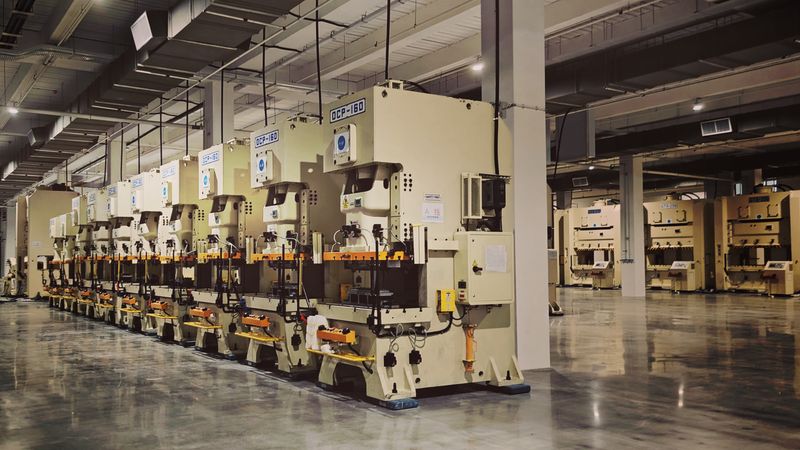
Row of industrial fabrication machines on a factory floor

Manufacturing

Payment processing that matches your purchase order cycle.

  • Purchase-order aligned billing
  • ACH for large B2B orders
  • Net-terms invoicing support
Custom FabricationIndustrial Supply

Compare Your Actual Numbers

The fastest way to see the difference is to compare your actual numbers. Send your last statement — we'll mark up exactly where you're overpaying and get it back to you within 24 hours.

Get Your Free Statement Review Transparent Pricing · No Long-Term Contract · PCI DSS Compliant · A Real Person On Your Account
Questions

Credit Card Processing FAQ

Pricing & Rates

What's the difference between Interchange Plus and Multi-Tier pricing?

Interchange Plus separates the actual network cost (set by Visa, Mastercard, and the other card brands) from Argent's markup, so both are visible on your statement. Multi-Tier groups transactions into pricing buckets like "qualified" and "non-qualified," which can be simpler to read but makes it harder to see exactly what you're paying for. We'll recommend whichever genuinely fits your card mix and volume, not whichever is more profitable for us.

How much does credit card processing typically cost?

There's no single number — your effective rate depends on your card mix, how sales come in (card-present vs. card-not-present), and your monthly volume. Most small businesses land somewhere between 1.8% and 3.5% once every fee is accounted for. Send a recent statement and we'll calculate your actual effective rate rather than quoting a generic figure.

Are there monthly fees or minimums?

Some accounts carry a modest monthly account fee; we disclose it upfront rather than burying it in a rate sheet. We don't charge a monthly minimum that penalizes you for a slow month, which is a common fee at other processors that catches merchants off guard.

Can my rate change after I sign up?

Interchange itself can move, since it's set by the card networks twice a year and applies to every processor equally. Argent's own markup is fixed and disclosed in writing at signing, and we don't quietly raise it without telling you — if you ever see an unexplained increase, that's worth a call to your account contact.

Do you charge a PCI compliance fee?

We walk every merchant through their annual PCI Self-Assessment Questionnaire as part of onboarding, which keeps most accounts compliant and avoids the recurring non-compliance fee some processors charge by default. If your business does end up in a higher compliance tier due to volume, we'll explain exactly why before it shows up on a statement.

Setup & Equipment

Can I keep my current terminal or POS?

Often, yes. Many countertop terminals and POS-integrated card readers can be reprogrammed to run on Argent's processing instead of being replaced outright. Send us your terminal model and POS setup and we'll confirm compatibility before you commit to anything.

How long does it take to get approved and set up?

Most standard small business applications are approved within 24 to 48 hours. Specialized or higher-risk industries can take a bit longer while underwriting reviews additional documentation. Once approved, connecting your equipment or gateway is typically a same-day task.

Do you support online and in-person processing on one account?

Yes — card-present and card-not-present transactions run through the same processor and report into one dashboard, so you're not reconciling two separate systems for one business.

What happens if my equipment breaks?

We coordinate a replacement or repair through our equipment partner so you're not stuck without a way to take payments. Depending on the issue, that might mean an express replacement unit or a guided fix over the phone.

Is there a contract or early termination fee?

No. Argent is month-to-month, with no long-term contract and no early termination fee. If you're currently locked into a multi-year agreement elsewhere, ask your current provider directly what leaving would cost — that number is often the real reason switching feels harder than it should.

Support & Security

Who do I call if a transaction won't process?

You'll have a named point of contact on your account, not a rotating call center queue. For urgent issues, that means a real person who already knows your setup, not starting from scratch with a new agent every time.

How is my customers' card data protected?

Card data is encrypted in transit and tokenized immediately after capture, meaning your own systems never store the actual card number. Combined with PCI-compliant infrastructure, this is the same level of protection used for large enterprise transactions, not a scaled-down version for small businesses.

What happens if a customer disputes a charge?

You'll be notified with the specific reason code and a response window, typically one to two weeks. We help you build evidence targeted to that exact reason — delivery confirmation, signed receipts, or communication records — rather than a generic response that's less likely to succeed.

Can I get same-day or next-day funding?

Standard funding is typically one to two business days after your batch closes. Faster funding options are available for businesses where cash flow timing matters, usually for an added fee — ask your account contact what's available for your volume.

How do I switch from my current processor?

We handle the transition with minimal disruption — setting up your new account, testing hardware and gateway connections, and timing the cutover for a low-volume window before fully retiring your old provider. Most switches take two to four weeks from start to finish.

Related

Explore More