Solutions › Fraud Prevention

Fraud Protection That Can Lower Your Costs, Not Just Your Risk

AVS, CVV verification, and tokenization reduce chargeback exposure — and can bring your effective processing rate down in the process.

Get Your Free Statement Review
Fraud Prevention

Protection That Pays for Itself

Fraud prevention usually gets sold as a cost center — something you pay for to avoid a bad outcome, with no upside beyond avoiding disaster. That framing misses half the picture. Every fraudulent or disputed transaction costs you the sale, the product or service you already delivered, and often a chargeback fee on top — and a pattern of chargebacks can put your merchant account itself at risk. The same tools that catch that before it happens can also work in your favor on cost:

Fewer fraudulent transactions and chargebacks is the visible win. The quieter one is that a well-verified transaction can qualify for a lower interchange rate than an unverified one — so the same AVS and CVV verification that protects your merchant account can also lower what you pay.

Common Challenges

Common Fraud & Chargeback Challenges

The same five issues come up again and again for businesses without a real fraud-screening setup.

Chargebacks Eating Into Revenue

Without fraud screening in place, disputes show up after the sale is already gone.

"Friendly Fraud" Disputes

Customers disputing legitimate charges they don't recognize on their statement.

False Declines

Overly aggressive screening blocking legitimate customers and costing real sales.

No Visibility Into Why a Transaction Was Flagged

A decline with no explanation, leaving staff guessing whether to retry or refuse the sale.

Card Data Exposure Risk

Storing raw card numbers instead of tokens, increasing what's at risk if a breach happens elsewhere.

Built For Your Business

We Work With Businesses Like Yours

From boutique retail to industrial distribution, Argent adapts to how your business actually accepts payments — not a one-size-fits-all setup. Every industry below gets its own processing setup, priced and built around how that business actually runs.

Boutique retail store checkout counter

Retail

In-store and online payment processing that keeps up with however you sell.

  • In-store, online, and BOPIS orders under one system
  • Barcode-scanning POS & SKU-level inventory sync
  • Built to handle holiday volume spikes
Boutique & SpecialtyMulti-LocationE-Commerce
Bright contemporary restaurant dining room

Restaurants

Table-side, counter, and online ordering, all under one processor.

  • Online ordering integrations
  • Tip adjustment support
  • Fast funding options
Quick-ServiceFull-ServiceBar & Nightlife
Technician servicing a home heating unit

Field Services

Get paid on the job site with mobile and virtual terminal options.

  • Mobile & virtual terminal payments
  • Job-site invoicing
  • Recurring service billing
HVAC & PlumbingContractingHome Services
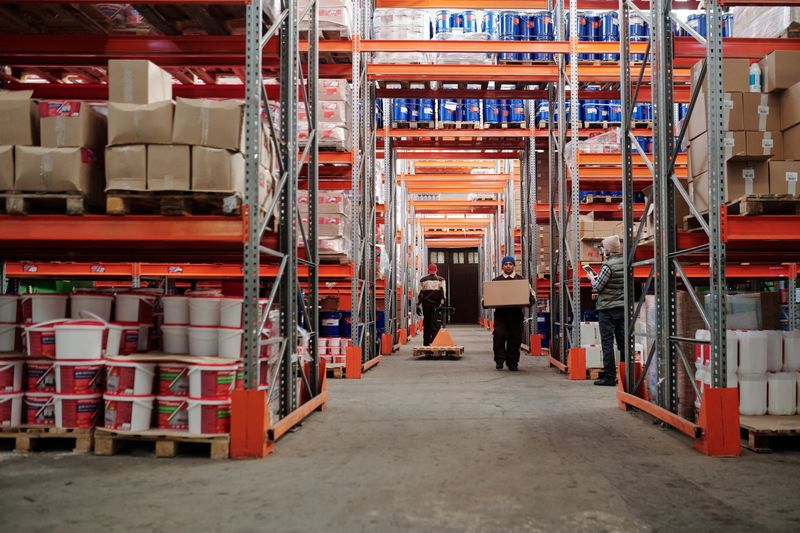
Warehouse workers moving inventory between shelving aisles

Distribution

Lower-cost ACH processing built for larger B2B transactions.

  • ACH acceptance for large orders
  • ERP integrations
  • Accounts receivable automation
WholesaleB2B Supply
Dental clinic treatment tray

Healthcare

Secure, PCI-compliant payment collection for patient balances.

  • PCI compliance assistance
  • Recurring billing
  • Patient payment plans
Medical PracticesDentalSpecialty Clinics
Row of industrial fabrication machines on a factory floor

Manufacturing

Payment processing that matches your purchase order cycle.

  • Purchase-order aligned billing
  • ACH for large B2B orders
  • Net-terms invoicing support
Custom FabricationIndustrial Supply

See What Skipping Fraud Prevention Costs You

If fraud prevention isn't part of your current setup, it's likely costing you more than it would cost to add. Send your last statement and we'll show you where.

Get Your Free Statement Review Transparent Pricing · No Long-Term Contract · PCI DSS Compliant · A Real Person On Your Account
Questions

Fraud Prevention FAQ

How It Works & Pricing

Is fraud prevention an extra fee on top of processing?

No — AVS, CVV verification, and tokenization are built into standard processing rather than sold as a separate line item. Better-verified transactions can also qualify for improved interchange rates, which can offset costs elsewhere.

How does fraud screening actually lower my processing rate?

Interchange qualification is partly based on how well a transaction is verified. Transactions with clean AVS and CVV matches tend to qualify for better interchange categories than unverified ones, which can meaningfully affect your effective rate over time.

What's the difference between AVS and CVV verification?

AVS checks that the billing address entered matches what the card issuer has on file. CVV verification confirms the 3- or 4-digit security code, which is meant to prove the physical card is in the customer's possession. Both catch different types of mismatches.

Does fraud screening slow down checkout?

No — these checks happen automatically during authorization, which typically completes in one to two seconds, the same as a standard transaction without screening.

Can I adjust how strict the fraud screening is?

Yes, within reason — screening sensitivity can be tuned based on your business type and risk tolerance, since overly aggressive settings can cause false declines on legitimate customers.

Chargebacks & Disputes

What happens if a customer disputes a charge?

You'll be notified with the specific reason code and a response window, typically one to two weeks. We help you build evidence targeted to that exact reason, rather than a generic response that's less likely to succeed.

Can fraud prevention eliminate chargebacks completely?

No — some chargebacks stem from actual fraud unrelated to anything you did, and a portion (sometimes called "friendly fraud") comes from customers disputing legitimate charges. Screening reduces your rate substantially but doesn't eliminate it entirely.

Does a high chargeback rate affect my processing costs?

Yes — processors and card networks monitor chargeback ratios, and merchants above certain thresholds can face increased fees or additional monitoring. Keeping your rate low protects both revenue and your standing with your processor.

What evidence actually helps win a dispute?

Evidence targeted to the specific reason code — delivery confirmation for "not received" disputes, signed authorization for recurring billing disputes, AVS/CVV match data for unauthorized-transaction claims. Generic responses rarely succeed.

Should I just refund a customer instead of fighting a dispute?

It depends on the situation. If the claim looks clearly valid, a refund is often simpler and avoids a chargeback fee. If you have strong evidence the charge was legitimate, disputing it can be worthwhile, particularly for higher-value transactions.

Setup & Security

Is fraud screening automatically enabled on my account?

Yes — AVS, CVV verification, and tokenization are part of standard processing, not an opt-in feature you have to request separately.

How is customer card data protected once it's tokenized?

Tokenization replaces the actual card number with a randomly generated substitute immediately after capture. The token is useless to anyone who intercepts it, since it can't be reverse-engineered back into the real card number.

Does fraud prevention help with PCI compliance?

Yes — tokenization in particular reduces your PCI compliance scope, since your own systems never store raw card data. That's a meaningful piece of your overall compliance picture.

Who do I contact if I think a fraudulent transaction slipped through?

You'll have a named point of contact on your account team who can investigate the specific transaction directly, rather than a general support queue.

Can I get a report showing flagged or declined transactions?

Yes — your account dashboard shows flagged, declined, and disputed transactions so you can review patterns over time rather than reacting to each one individually.

Related

Explore More